
Happiness has no age limit, and beginning again after 50 may be the first step toward some of your happiest years.

When you hear that a couple is divorcing after 30 or 40 years, your first thought might be, “Why now?”
It’s an understandable question.
We tend to assume that a marriage which has survived children, mortgages, career changes, and arguments over the toilet seat will make it for the long haul.
But not so fast.
Gray divorce has become a significant demographic trend, challenging the idea that couples who stay together through middle age will automatically grow old together.
“DO I WANT ANOTHER 25 YEARS OF THIS?”
Like everything in life, what you see is often not what you get.
The reality is that many long-term marriages are not perfect—or even close. In many cases, the longevity is actually a direct result of distraction: busy families, busy jobs and busy lives.

Therefore, once the kids are gone and retirement is looming, and with life expectancy getting longer (80 for men and 84 for women, as of 2024), many are asking the all-important question: do I want another 25 years of this?
WHAT DO THE STATISTICS SHOW?
In 1990, in the United States, people aged 50 and older represented about 8% of those divorcing. Research using 2022 data put that share at nearly 40%.
Wow.
The strongest evidence comes from the United States. Researchers found that the divorce rate among adults aged 50 and older doubled between 1990 and 2010.
More recent figures show more striking changes: a comparison of 1990 and 2023 figures found that the annual divorce rate for people aged 65+ rose from 1.8 to 6.1 per 1,000 married people—more than tripling.
Over the past few years, this rapid growth has leveled off somewhat, in some cases stopping entirely. But one thing is for certain, there are more people over age 50 today who have decided to leave a long-term marriage than ever before.
GENERATIONS THAT CHANGED MARRIAGE
#1: Baby Boomers
A big part of this story actually begins decades ago. Baby Boomers (those born between 1946 and 1964) experienced unusually high divorce levels as young adults during the “divorce revolution” of the 1970s and 1980s.
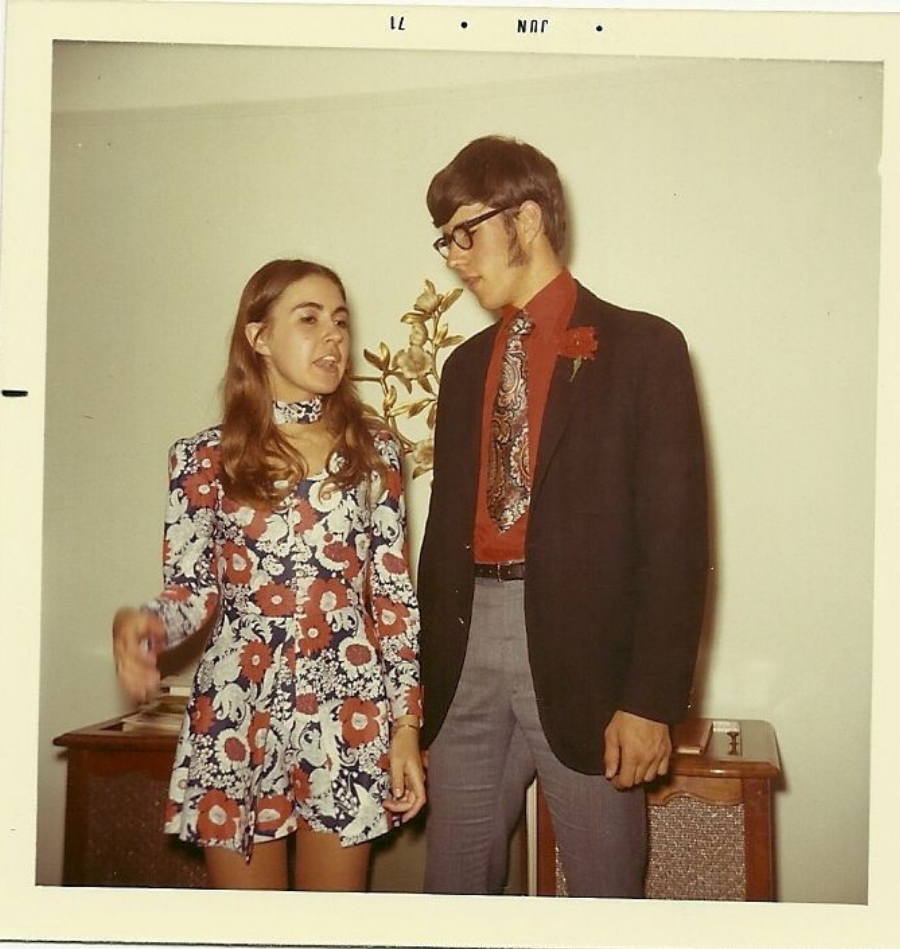
As these Baby Boomers aged, these marriage histories impacted later-life divorce patterns.
Why?
Because many of these people, who divorced early, subsequently remarried. And remarriages have twice the divorce rate of first marriages.
#2: Generation X
For many Generation Xer’s (born 1965 to 1980), turning 50 brought with it an important existential question: is this the marriage I want for the rest of my life?
Many women from this generation spent decades building careers, raising children and managing family responsibilities. Distance, dissatisfaction and loneliness that once was tolerated suddenly became impossible to ignore.
And because many GenX women succeeded in achieving financial autonomy, separation was a viable option, unlike many women from previous generations.
TIRED OF CARRYING THE LOAD
For many women aged 50+, the gap between marriage expectations and the actual everyday experience was simply too great.
Women thrive in marriages that are built upon the cornerstones of companionship, mutual respect and shared responsibility. The unfortunate reality is that many women end up carrying the majority of the mental load when it comes to marriage.

Over time, this imbalance erodes connection. And a lack of connection leads to a lack of emotional intimacy, which then leads to a lack of physical intimacy. There is a reason why so many long-term marriages are sexless; it is the result of a downward spiral that grew and grew over the course of many years.
Therefore, choosing divorce after 50 is rarely just a “change of heart”. Rather, it often represents the culmination of years of longstanding problems.
IS AN EMPTY NEST A CAUSE OF DIVORCE?
Reaching age 50 is definitely a time for reassessment. As children grow and become more independent, there are fewer distractions from one’s relationship. Differences in interests, affection or future plans suddenly become more visible.
However, research has shown that an empty nest is rarely the cause of divorce. Instead, an empty nest tends to expose problems that were already present in a marriage.
During the many years raising children, couples focus so heavily on parenting, routines, and family responsibilities that they overlook emotional distance or unresolved conflict.
Once their children leave home, those responsibilities no longer serve to fill the days and nights. It is then that partners realize that their bond was more “co-workers” than romantic life partners.
In this sense, an empty nest can highlight a flawed relationship that was being sustained by the demands of family life.
WHAT ABOUT RETIREMENT? IS THIS A FACTOR IN GRAY DIVORCE?
Retirement is another popular explanation for gray divorce. You can see why it can feel obvious: remove the busy work schedules, work travel, and constant deadlines, and a couple may suddenly feel their marriage no longer works.
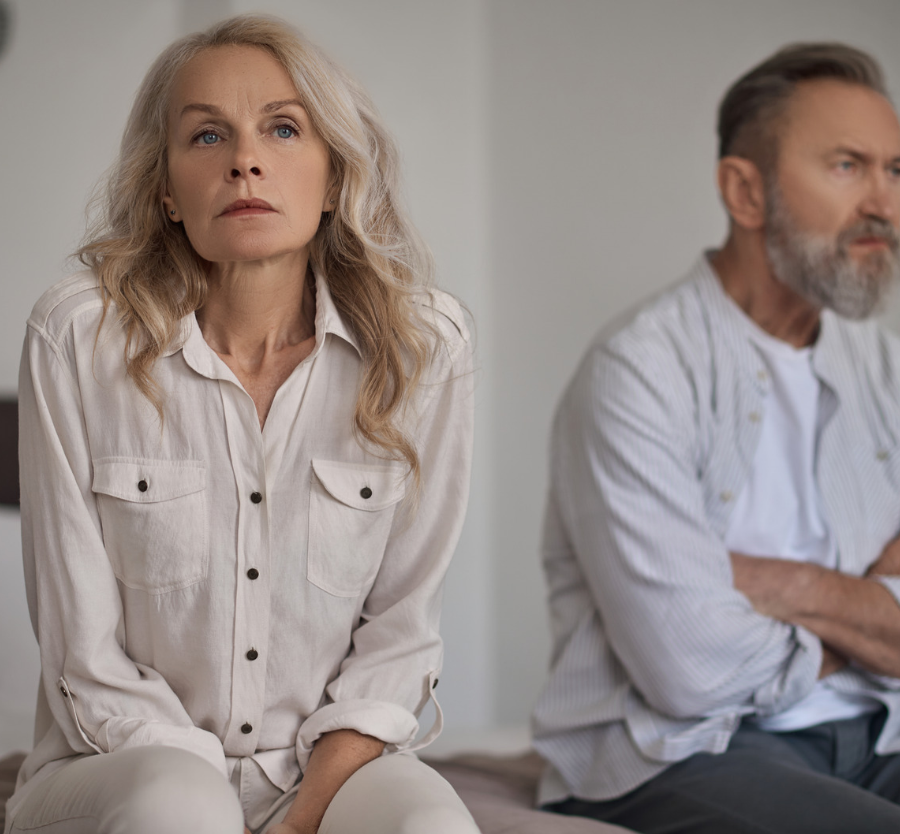
But just like the empty nest, retirement is not a cause of divorce. Rather, it is a time when the already-existing flaws in a marriage become more apparent.
This finding was confirmed in a longitudinal study conducted from 1998 to 2012 which found that retirement, empty nest, and even a spouses’ chronic illness, are not independently associated with gray divorce.
This does not say that they don’t matter, because they do play a role. But it does point out that full-time, and often demanding, work schedules can mask a marriage that is lacking in communication, affection, or passion.
CHANGING SOCIAL ATTITUDES
In the 19th and early 20th centuries, divorce carried a strong social stigma in many Western societies, particularly for women. Divorced women would face disgrace and exclusion, even when it was their husbands who initiated the divorce, which was most often the case.
Attitudes began to shift during the 1960s and 1970s as feminist movements challenged traditional gender roles and divorce laws became more accessible. By the late 20th and early 21st centuries, in Western societies, divorce had become more widely accepted as a legitimate choice.
Because of this shift, today, ending an unhappy marriage carries far less stigma than it once did. With the prospect of many happy and rewarding years ahead, some women are simply unwilling to sacrifice their future wellbeing and fulfilment.
FINANCIAL INDEPENDENCE
Greater financial independence for women is another contributing factor identified in discussions of gray divorce. Employment and higher earnings make separation more feasible than it once was for women, most notably women who worked at home, versus in the workforce, and therefore were entirely dependent on their husband’s income.
This financial independence gives a woman room to consider leaving an unhappy marriage she previously felt unable to leave.
LONGER LIVES CHANGE THE GAME
Research has suggested that longer life expectancy contributes to gray divorce, which definitely makes sense. The prospect of decades more of an unhappy or unfulfilling marriage is enough to give pause.
Back in the day, reaching age 50 or 60 often brought about feelings of, “Well, I’ve stayed this long, I may as well stick it out.”
Not anymore.
With longer lifespans, and active living extending well into our 70s and 80s, fewer are willing to simply suck it up.

Longer lives have changed the horizon against which we evaluate our choices.
EXPECTATIONS OF MARRIAGE HAVE CHANGED
There has been a broader shift in the meaning of marriage over the past 50 years. Tradiationally, marriage was viewed as an expected milestone—that was largely economic—tied to financial stability, raising children, and fulfilling established gender roles.
Today, greater emphasis is placed on emotional connection, equality, and personal fulfillment. Marriage partners are increasingly expected to share responsibilities and support each other’s goals.
Greater acceptance of diverse family structures such as remaining single or living together without marriage has also made marriage more of a personal choice than a social obligation.
Over recent decades, expectations of what a committed partnership should look like and provide have most definitely evolved. Amongst younger generations, there is now an accepted belief that a shared household does not automatically equate to a successful marriage. Bills can be paid, birthdays remembered, and the recycling put out while emotional intimacy quietly disappears.
We have reached a time when we are willing to acknowledge longstanding unhappiness and able to do something to change it.
LOOKING BEYOND THE HEADLINES
Leaving an unhappy marriage after decades together often means grieving the future you once imagined, and this can be heartbreaking. Denying these emotions would be wrong.
However, divorce over 50 can also open the door to a life that feels more fully your own—one with peace, renewed friendships, unexpected love, or the simple joy of feeling comfortable in your own home.
Your married years will always be part of your story, but you deserve a say in what comes next. Happiness has no age limit, and choosing to begin again may be the first step toward some of your happiest years.